


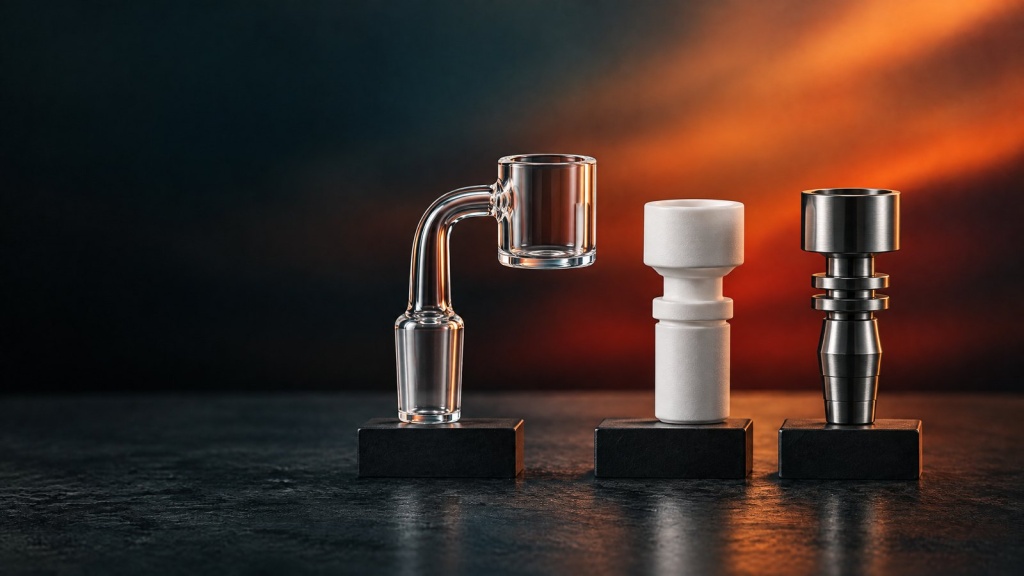
The nail or banger is where a dab rig turns heat into usable vapor, so its material has an outsized effect on timing, maintenance, and daily convenience. Comparing a quartz vs ceramic vs titanium dab nail is not about finding one material that wins every category. Quartz is popular for clean flavor and fast response, ceramic is known for even heat retention, and titanium is valued for durability. The best choice depends on what you prioritize.
Before comparing materials, make sure you are shopping for the correct joint size, joint gender, and angle. A high-quality nail that does not fit your rig is not useful. Our overview of the best dab rig accessories in Phoenix explains the wider setup, including carb caps, tools, terp pearls, and torches.
Quartz Bangers: Responsive and Flavor-Focused
Quartz is the most common material for modern bangers. It heats relatively quickly and responds predictably when the heat source is removed. That responsiveness gives the user a narrower, more controllable window for choosing a preferred temperature.
A quartz banger is usually shaped like a bucket attached to a glass joint. Flat-top designs work with many carb caps, while specialized styles may include thicker bottoms, internal pillars, or channels intended to move concentrate and airflow.
Quartz is rigid but not indestructible. Repeated overheating can create a cloudy, devitrified surface, and thermal shock can cause damage. Letting a hot banger contact cold liquid or a cold surface is never a good idea. Routine cleaning after use helps prevent residue from baking onto the surface.
Quartz is a strong fit when you value:
Quartz works well for shoppers who prioritize flavor neutrality, quick heat-up, a broad accessory ecosystem, and easy visual inspection. It is also widely available in different sizes, thicknesses, and shapes.
Ceramic Nails: Even Heat and Longer Retention
Ceramic heats more slowly than many quartz pieces, but it can retain heat for a longer period. That slower response may appeal to someone who prefers a wider working window and does not mind waiting longer during the warm-up phase.
Ceramic is visually opaque, so it is harder to inspect the interior surface than a clear quartz bucket. It can also be vulnerable to cracking if dropped or exposed to sudden temperature changes. Quality and manufacturing consistency matter because ceramic components must tolerate repeated heating cycles.
Ceramic surfaces should be cleaned according to the manufacturer’s guidance. Aggressive scraping can damage a finish, and moving a hot component into a cold environment can create thermal stress.
Ceramic is a strong fit when you value:
Ceramic may suit shoppers who prioritize steady heat retention, even heating, and a material that does not require the rapid timing associated with thin quartz. It is less common in many local display cases, so availability and replacement options should be considered.
Titanium Nails: Durable and Travel-Friendly
Titanium nails are known for physical durability. Unlike quartz or ceramic, titanium does not shatter when dropped. It heats quickly and can tolerate frequent handling, which is useful for travelers or owners who want a long-lasting component.
Material quality is critical. A titanium nail should be made for this application and sold by a reputable manufacturer. Avoid unidentified metal components. Titanium can also retain heat longer than expected, creating a burn risk if handled too soon.
Some titanium nails require seasoning according to the manufacturer’s instructions before regular use. Follow the specific product guidance rather than relying on a universal online technique, because designs and finishes vary.
Titanium is a strong fit when you value:
Titanium is a practical choice for durability, portability, and resistance to breakage. It may be less appealing to shoppers who prefer the visual cleanliness and flavor-focused reputation of a quartz banger.
Side-by-Side Material Comparison
| Material | Heat-up behavior | Heat retention | Durability | Maintenance considerations | Common shopper priority |
|---|---|---|---|---|---|
| Quartz | Fast and responsive | Moderate; depends on thickness | Good, but can crack or cloud | Clean promptly; avoid overheating and thermal shock | Flavor neutrality and control |
| Ceramic | Slower and even | High | Moderate; can crack | Follow manufacturer guidance; avoid sudden temperature change | Longer working window |
| Titanium | Fast | Moderate to high | Excellent against drops | Use application-grade material; allow ample cooling | Durability and portability |
Thickness and design can matter as much as material. A thick-bottom quartz banger may retain heat longer than a thin one. A large titanium nail may cool differently from a compact design. Treat the table as a starting point, then compare the actual components.
Banger Shape, Joint Size, and Angle
Material is only one part of compatibility. Common joint sizes include 10mm, 14mm, and 18mm, and the fitting may be male or female. The joint angle is often 45 or 90 degrees. A mismatch can place the bucket at an unsafe angle or prevent the component from seating correctly.
Bring the clean rig or clear photos of its joint when shopping. Measure before buying rather than guessing. The team at our McDowell Road smoke shop can help compare common fittings and available accessories.
Temperature Control and Electronic Alternatives
The central challenge with any torch-heated nail is repeatability. Overheating can degrade flavor and create more residue, while insufficient heat may not vaporize material efficiently. Some users rely on timers or non-contact temperature tools to improve consistency.
Others prefer an electronic concentrate vaporizer, which replaces a traditional torch-and-nail setup with controlled heating. Browse our Concentrate Vaporizers and Puffco Collection pages if you are comparing traditional rigs with electronic systems.
The CDC notes that dabbing involves inhaling cannabis oils or concentrates and that these products can contain highly concentrated THC or contaminants.1 Adult consumers should follow applicable laws, avoid impaired driving, and make informed decisions about concentrated products.
Care Practices for Any Material
Whichever material you choose, begin with the manufacturer’s instructions. Let components cool before touching or removing them. Keep the joint clean, avoid forcing a stuck connection, and never use a cracked or damaged nail.
For quartz, gentle swabbing after use can reduce buildup. For ceramic, avoid metal tools that may scratch the surface unless the maker specifically permits them. For titanium, watch for damaged threads, unusual discoloration beyond expected seasoning, or an uncertain material source.
A clean rig matters too. Residue elsewhere in the glass can undermine the benefits of a new nail. Review our bong cleaning guide for general glass-maintenance principles, adapting the method to your rig and removable components.
Compare Dab Nail Materials in Phoenix
In the quartz vs ceramic vs titanium dab nail comparison, quartz is the best all-around starting point for many shoppers, ceramic emphasizes steady heat retention, and titanium offers unmatched resistance to breakage. No material replaces correct sizing, careful heating, and routine maintenance.
Visit It’s All Goodz at one of our Phoenix smoke shop locations to compare available bangers, nails, and concentrate accessories. Bring the measurements of your clean rig, describe how you use it, and ask which options fit both the joint and your maintenance preferences.