


Comparing kava vs kratom drinks starts with two separate questions: which botanical is inside, and what kind of beverage is it? Kava and kratom are different plants. A small bottle, a canned seltzer, and a mixed botanical product can look related on a shelf without containing the same ingredients.
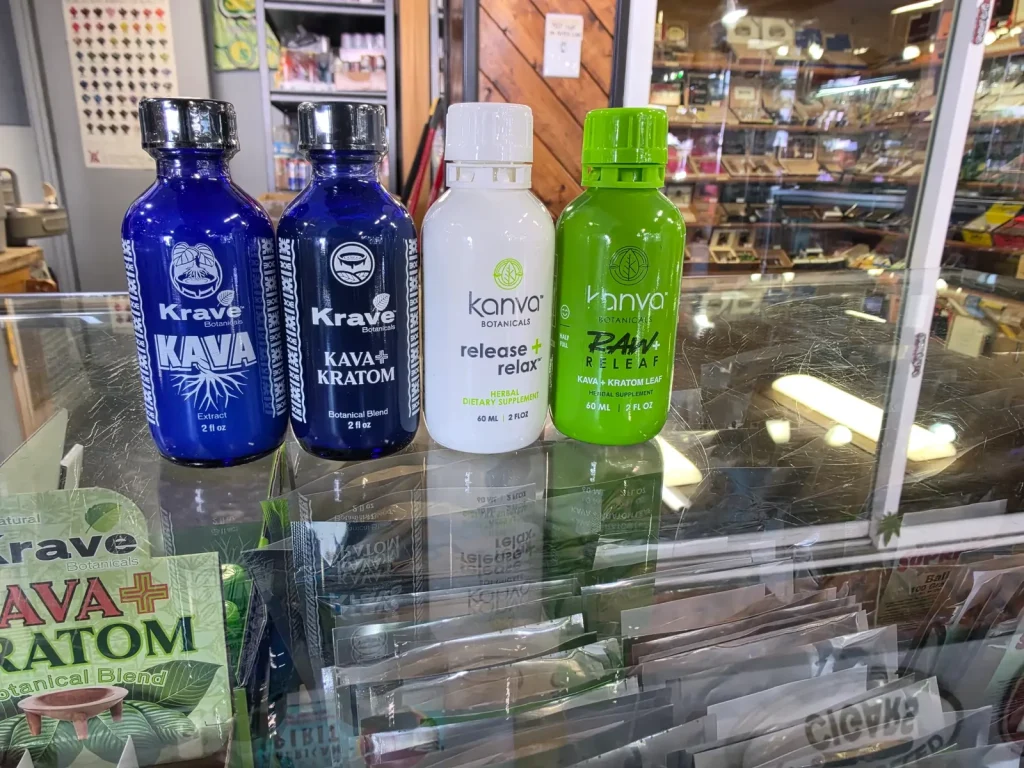
The photographed selection at It’s All Goodz makes those distinctions easier to see. It includes Krave Botanicals Kava, Krave Kava + Kratom, Kanva Release + Relax, and Kanva RAW + RELEAF, alongside canned seltzers. These original photos document a selection, not live inventory. Check availability before visiting for a particular product.

Kava and Kratom Are Different Botanicals
What identifies a kava product?
Kava is Piper methysticum, a plant native to the South Pacific and a member of the pepper family. Its history includes traditional beverages used by Pacific Islanders. Those botanical facts come from NCCIH’s kava overview, which also explains important risks.
For packaged drinks, look for a clear kava identification on the label. Mitra9’s official Lemonade Kava Seltzer page, for example, describes a carbonated product made with kava extract sourced from roots. That verifies a specific product type; it does not mean every kava-labeled drink has the same formulation.
What identifies a kratom product?
Kratom is Mitragyna speciosa, a Southeast Asian tree in the coffee family. Its leaves are the botanical material associated with kratom products. NCCIH’s kratom overview identifies mitragynine as one of its compounds and notes that research remains limited.
Some manufacturers use “mitragynine” prominently in current product names. Mitra9’s official Tangerine Mitragynine Functional Seltzer page is one example. Recognizing that term helps connect a manufacturer’s wording with the broader kratom-drink category. It does not make different kratom formulations interchangeable.
Single-Botanical Labels vs. Mixed Products
A kava-focused label and a kava-plus-kratom label describe different categories. “Single botanical” here means the identified botanical category, not a promise that the entire beverage has only one ingredient. Water, flavorings, sweeteners, and other ingredients still need checking.
Krave Kava and Krave Kava + Kratom
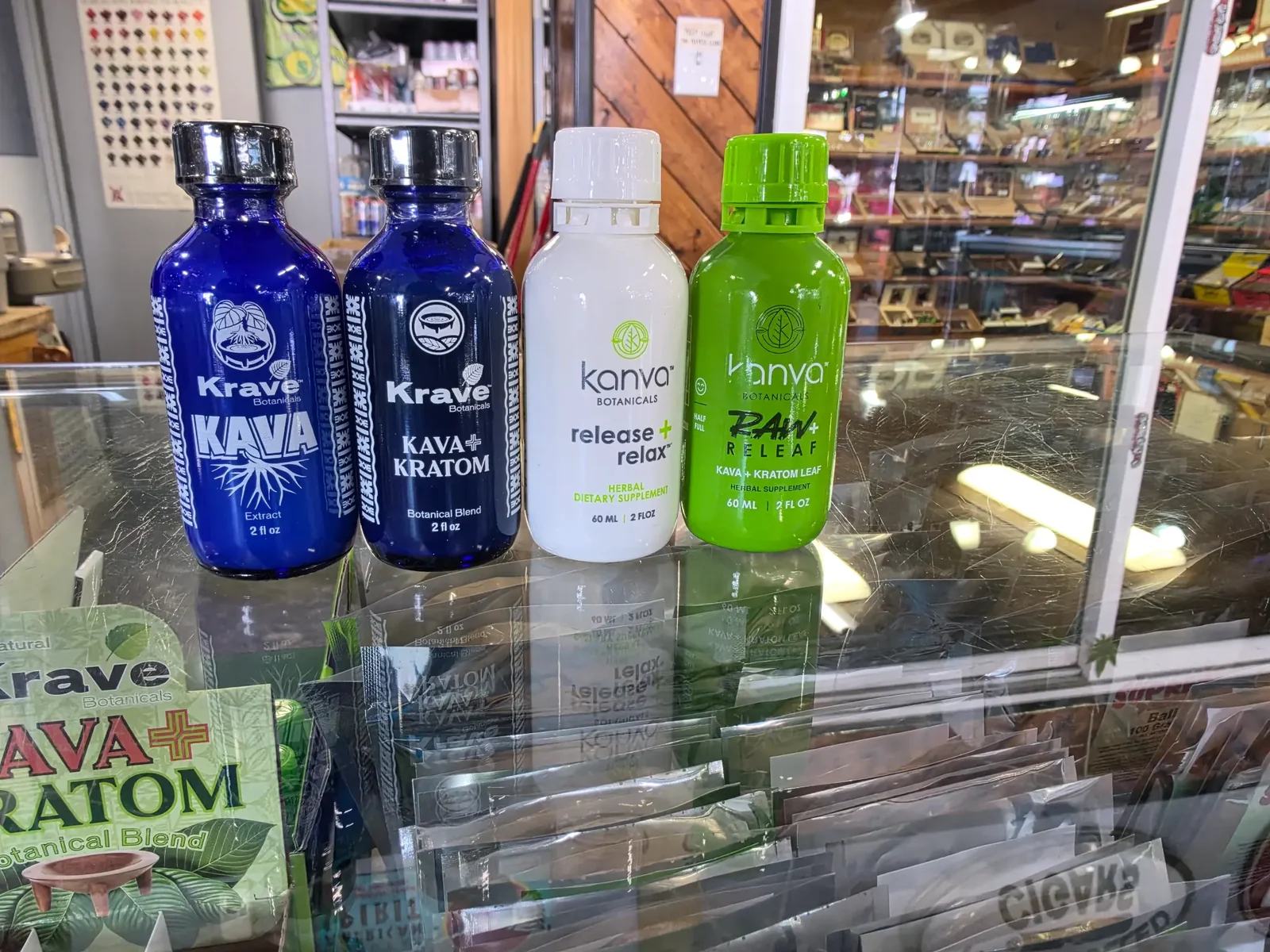
In the original bottle photo, the blue Krave Kava bottle reads “KAVA” and “Extract.” The adjacent darker bottle reads “KAVA + KRATOM” and “Botanical Blend.” Their similar bottle shapes and shared branding should not obscure that label difference.
These are descriptions of the photographed packaging, not claims about current formulas, strength, or effects. Turn the actual bottle around to read its full panel. The front label gives you a starting category; it is not a complete ingredient list.
Kanva Release + Relax and RAW + RELEAF
Kanva provides an especially useful example of why product names matter. Its official Release + Relax page describes a kanna-and-kava product and lists GABA. Kanna is not kratom, and Release + Relax should not be grouped with kratom-containing bottles simply because it appears beside them.
The green photographed bottle reads “RAW + RELEAF” and “KAVA + KRATOM LEAF.” Kanva’s official Raw + Releaf page identifies it as a kava-and-kratom product. This is a mixed botanical category, unlike Release + Relax’s kanna-and-kava category. The names describe products, not guaranteed outcomes.
Bottled Products vs. Carbonated Seltzers
Botanical identity and beverage format are separate characteristics. “Kava” or “kratom” identifies the botanical category. “Seltzer” identifies carbonation. A seltzer can therefore be kava-based or kratom-based; bubbles do not tell you which plant is inside.
The supplied bottle photo shows compact, capped packages. The supporting cooler photo shows larger pull-tab cans, including Mitra9 Tangerine and HET Strawmelon. Those visible packaging differences are useful for identifying formats, but they do not establish relative strength or predict a person’s response.
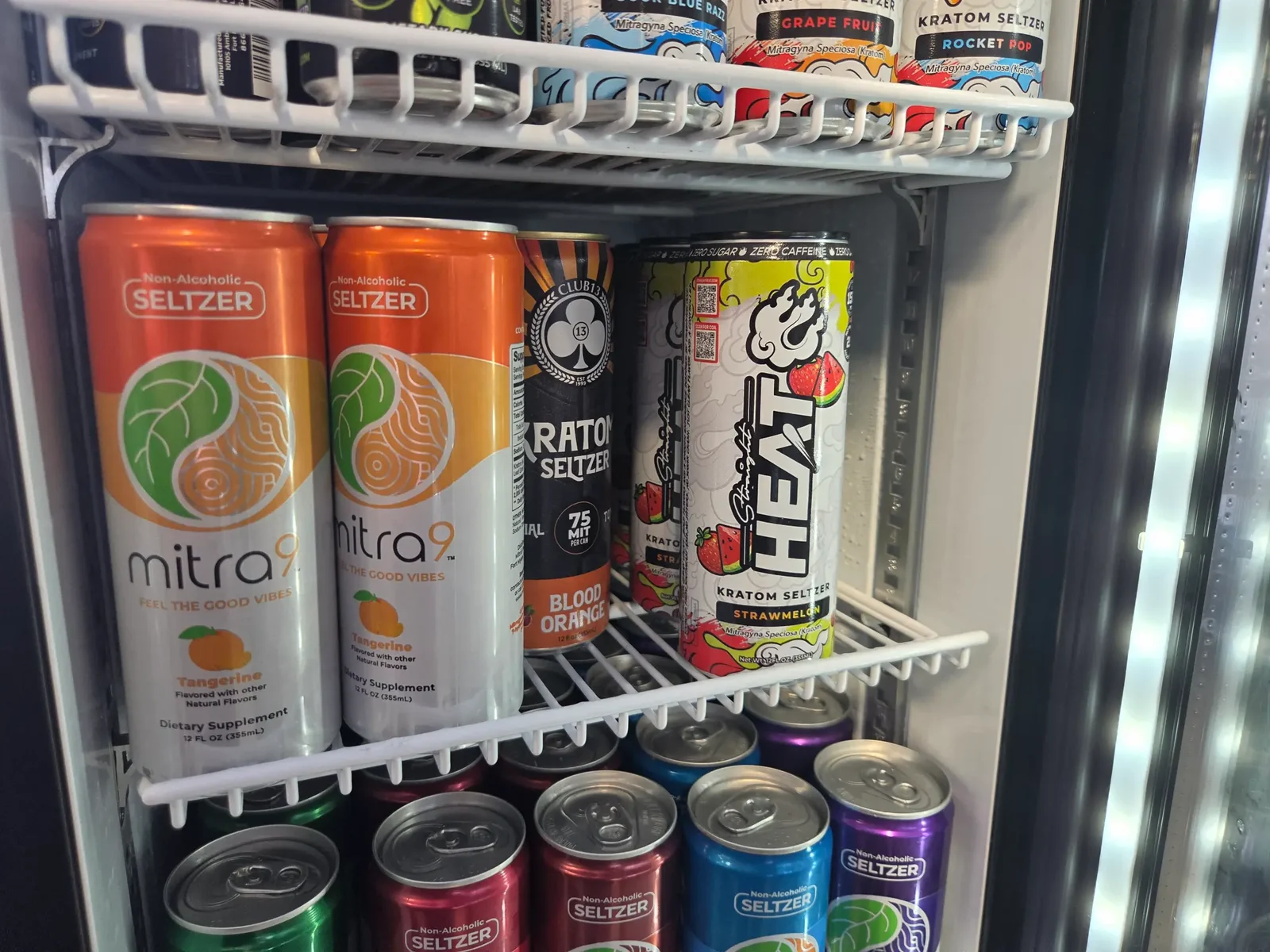
Mitra9’s specific manufacturer pages confirm both a carbonated kava product and a mitragynine seltzer.2 The photographed HET can explicitly says “Kratom Seltzer.” Read that product identification rather than relying on fruit graphics or a familiar logo.
A small bottle is not automatically equivalent to a can. Likewise, a larger drink is not automatically less concentrated. Container volume describes the liquid package, not its botanical composition. Compare the exact labels rather than treating bottle size or carbonation as a shortcut.
How to Read a Bottle or Can Without Guessing
Separate pack count from container information
Start with the full product name and format. Is the listing for one bottle, several cans, or a display box? Kanva’s product pages distinguish single bottles from display-box options.5 A pack count describes how many containers are included, not how much botanical material each contains.
Next, distinguish net contents from the labeled serving information. These fields answer different questions. Read whether the panel refers to a serving or the whole container, without assuming that one sealed package equals one serving. This is label interpretation, not a consumption recommendation.
Read the full ingredients, not just the flavor
“Tangerine” tells you the flavor name; it does not identify every ingredient. Look for the botanical names, any additional botanicals, sweeteners, and other listed components. A prominent kava claim does not rule out another botanical elsewhere on the panel.
Use the manufacturer page for the exact product as supporting information. Packaging versions and online descriptions can change. If the bottle or can differs from the website, ask the manufacturer to clarify rather than carrying details from another flavor or version across to it.
For a separate look at testing documentation, see our October guide, How to Identify Lab-Tested Kratom. That topic deserves its own checklist; this comparison focuses on identifying beverage categories and packaging.
Botanical Drinks Still Carry Risks
“Natural” does not mean risk-free. NCCIH links kava products to rare liver injury, including serious or fatal cases, and describes side effects and harmful medication interactions.1 NCCIH also notes kratom’s potential for addiction and withdrawal, reported side effects, and rare serious problems such as seizures and liver problems.3
Carbonation, fruit flavor, and attractive packaging do not remove those concerns. Neither a single-botanical label nor a mixed label establishes safety. This article does not recommend combining products. Review warnings, keep products away from children, and discuss medication use or health concerns with a qualified healthcare professional.
Check the Photographed Selection’s Availability in Phoenix
Browse our Products page for the broader store selection. For a specific photographed bottle or seltzer, call through the North Phoenix location page or McDowell location page before making the trip. Brands, flavors, packaging, and availability can differ by store and change over time.
The most useful kava vs kratom drinks comparison is not a ranking. It is a clear reading of the exact product: botanical identity first, single or mixed formulation next, then bottle or seltzer format and the complete label.